THEO CLARK MEDIA
  • Home Page
  • Blog & Gallery
  • Testimonials
  • Buy DVDs
  • Sports Clubs
  • Life Stories
  • War Memoirs
  • Film Library
  • In the News
  • Contact Us

20 years of Theo Clark Media

21/2/2026

2 Comments

 
Picture

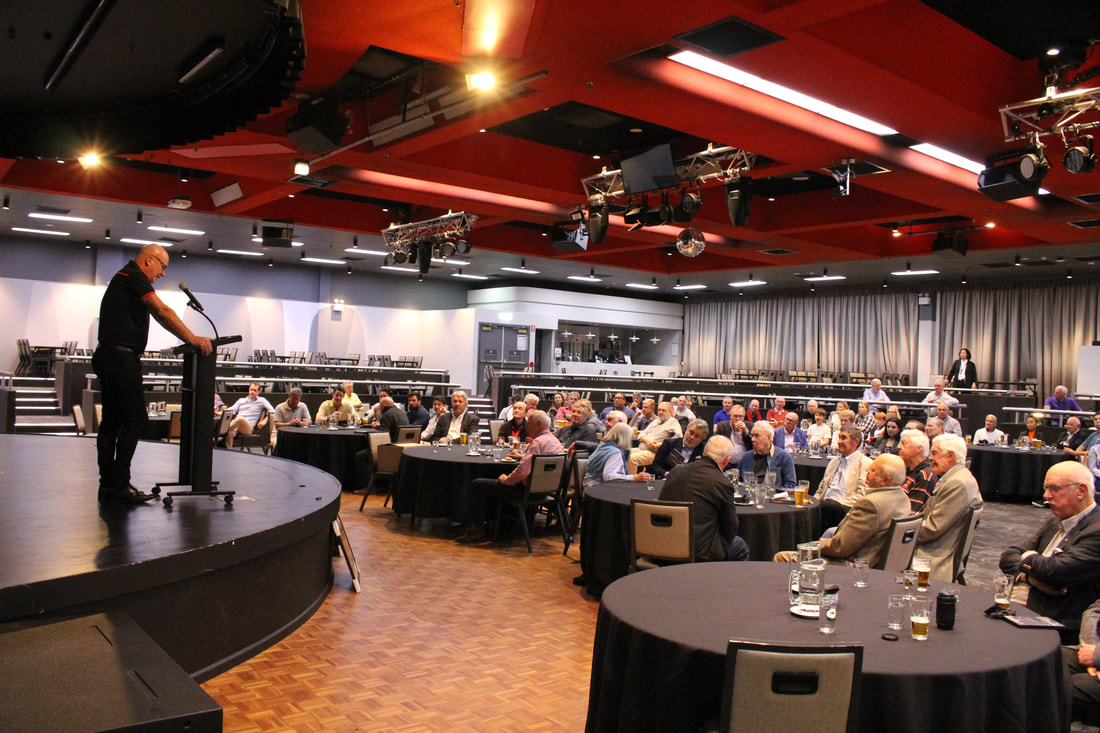
Today marks 20 years of Theo Clark Media. From early days filming weddings and events, to occasional bouts as an Olympics correspondent - and as an “extra” in obscure Chinese beer commercials - to filming operas, reunions, rugby stories, migrant stories, soldier stories, nun stories - and variously snapping or jotting down the passing the parade, it's been a great adventure. 

I think it was a call from family friend Lyn Chapman about filming a wedding that prompted me to register the business back in 2006.  After this, I had a fun education doing some odd media jobs while studying in China, around the time of the Beijing Olympics. I contributed some writing about the 2008 Games for The Canberra Times and worked as a digital producer with Channel Seven for the 2016 Rio Olympics, but it was an invitation in 2011 from Rob Sinclair OAM to record the history of the Lane Cove Rugby Club that set the template for much of my subsequent film work.

The local Lane Cove community was hanging from the rafters for the 2012 "world premiere" at the Longueville Bowling Club, aka "The Diddy", and visiting for the show was the coach of the Warren Pumas, Jack Brennan, whose team was approaching its 60th season playing in the Western Plains Comp in country New South Wales. And so a second  rugby history commission came about - this time to tell the story of the Warren Rugby Club. The doco proved a great opportunity to capture the unique spirit of rugby on the western plains and Gordon Bray reckoned "half of Warren" travelled to Sydney for its premiere.

Back in the city, commissions to record histories for Sydney Univeristy Football Club and Norths Rugby Club soon completed the circle of Subbies, Country and Shute Shield club rugby. Fittingly, Gordon Bray - the “Voice of Rugby” - provided narration for them all.

A call up to take my camera to Jim Lenehan’s woolshed near Gundagai to record the 50th anniversary of the 1966/7 Wallaby Tour of the UK, France and Canada introduced me to the wider Wallabies fraternity, with whom I have worked repeatedly ever since. On that particular project, I was privileged to encounter and record the last interviews with the captain and vice captain of the side, John Thornett and Ken Catchpole. Ken was in late stage dementia, and when I asked him to read from pages of notes he’d written about his life, he was as amazed as anyone at what he’d achieved.

“Wow”, Catchpole said as he put down the page.

And who could disagree?


The legendary halfback first captained Australia at 21, and with Thornett had helped lead Australia from easy beats to world beaters in the game of rugby. Dual International Johnny Brass told me that Catchpole was so skilful, that he would ask before passing a ball "Johnny, do you want it lace up, or lace down," adding - "I still don't know if he was serious or not, but he had the ability to play at that level."

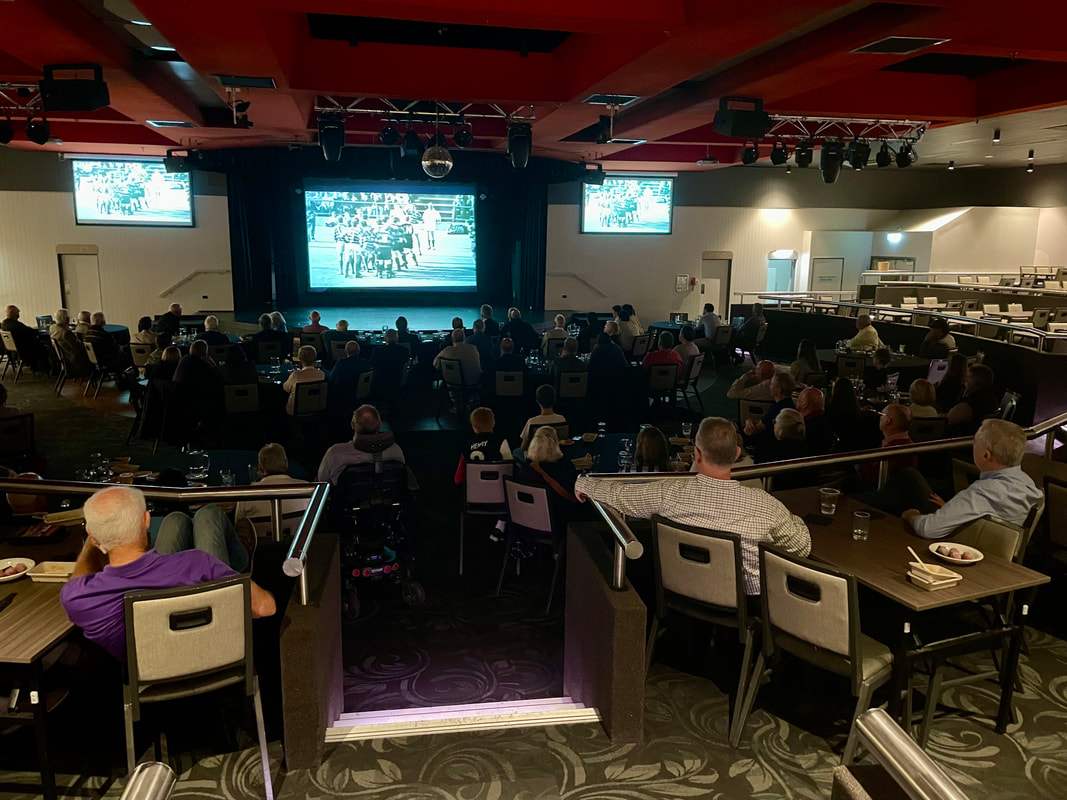
​The screening of the resulting documentary was the first event held at Rugby Australia’s new HQ at Moore Park, and I was very honoured when Gordon Bray quoted sections of the film for his recent book, the Immortals of Australian Rugby Union. The title of the film, "Sometimes the Best Ever" referred to a Thornett quote. He'd told the media that the 1966/7 Wallabies were "sometimes the best" he'd ever played with. The title also alludes to the revival of Australian rugby that was instigated largely by that contingent of players as they moved into coaching and administration, in particular through the system established by Dick Marks as National Director of Coaching. 

The crop of coaches and players that were developed under that system from the 1970s to the 1990s went on to win two World Cups, and as 1991 Cup winning coach Bob Dwyer told me while recording the film - "If we've done it in the past, we can do it in the future."

If you want to understand why Australia has only "sometimes" managed to be "the best" in the world -- you will just have to watch the documentary!

John Williamson let me use his Wallaby anthem in the movie and even came along for the screening. You can’t have a rugby documentary without music, and that all started with Opera Australia’s Kevin “Pav” Ferguson singing the Lane Cove Rugby song. Then there was Warren farmer-country singer Greg Storer, who wrote “Get the Gong” for the Warren Rugby doco. His sister Sara Storer liked it so much she recorded a cracking version with Greg for an album.

I was also honoured later to be invited to create video tributes for Ken Catchpole's funeral and John Thornett's memorial service at the Sydney Cricket Ground. I've been variously commissioned by the Classic Wallabies, local clubs and families of players to make films on the lives of various greats of the game, including Rob Heming, Peter Crittle, John O'Gorman, Alan Cardy, Rod Phelps, John Solomon, Dick Tooth and Dick Marks amongst others.

From 2019, I was invited by Ray Dearlove to create films for the inaugural and then annual Sydney University Wallaby Legends lunches, which led me to many interesting stories. After the death of Wallaby skipper John Solomon, whose career highlights included playing in Australia's first Bledisloe Cup victory in 1949, I received a lovely review from his daughter, Georgie Wilcox:
"In the last 6 months Dad has had so much pleasure watching over and over again the DVD, reliving some of his greatest sporting experiences – even as late as last week I put it on his TV screen, and anytime that anyone walked into the room, he would say ‘stop, be quiet, watch and listen’ as he was transfixed…….. including the cleaner, electrician, the physio, the nurse, his Dr……. He would say as he held my hand “George, we’re just getting to the punch line….. keep watching.”
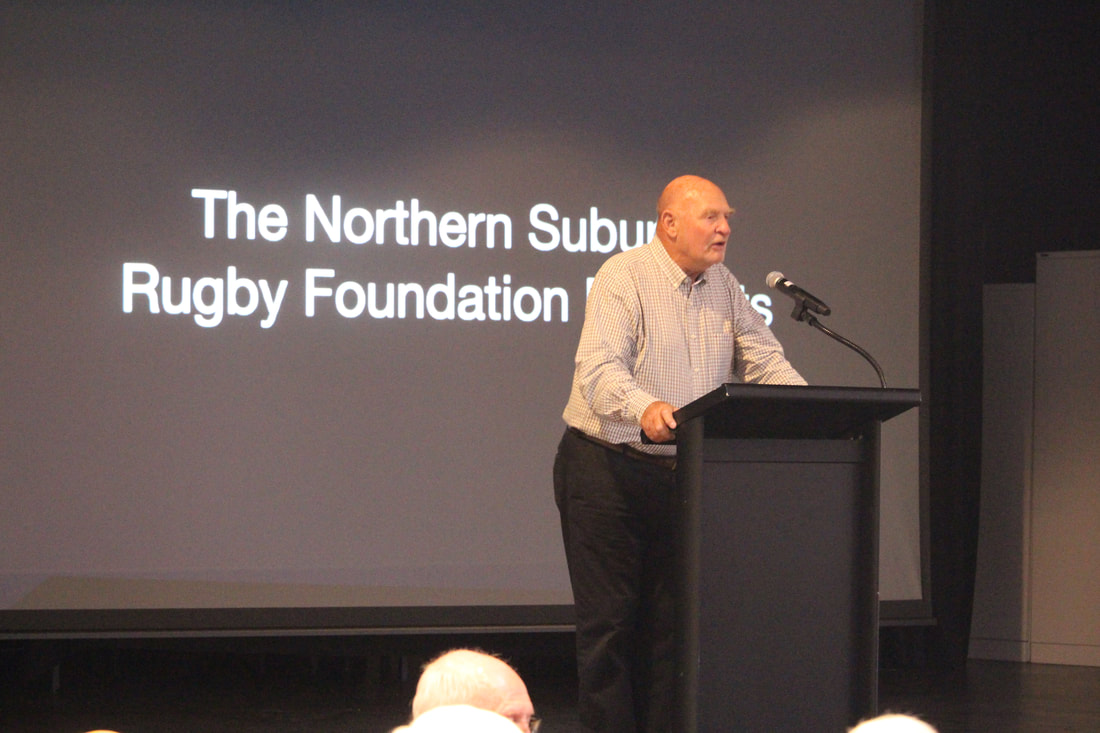
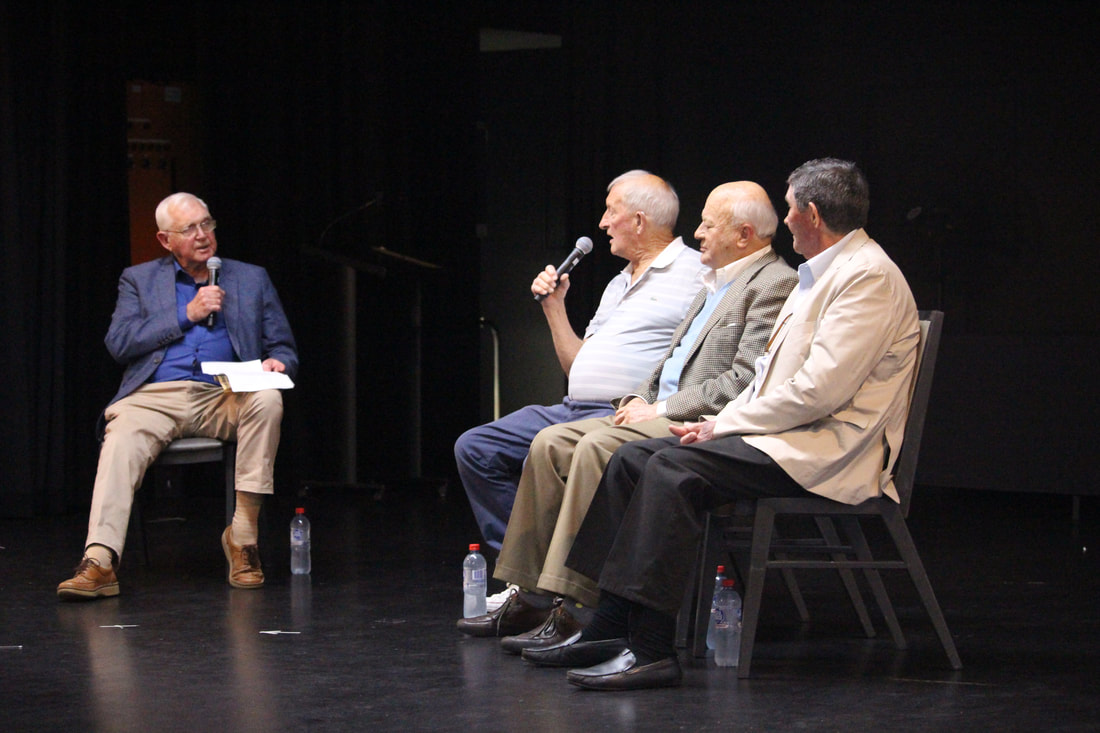
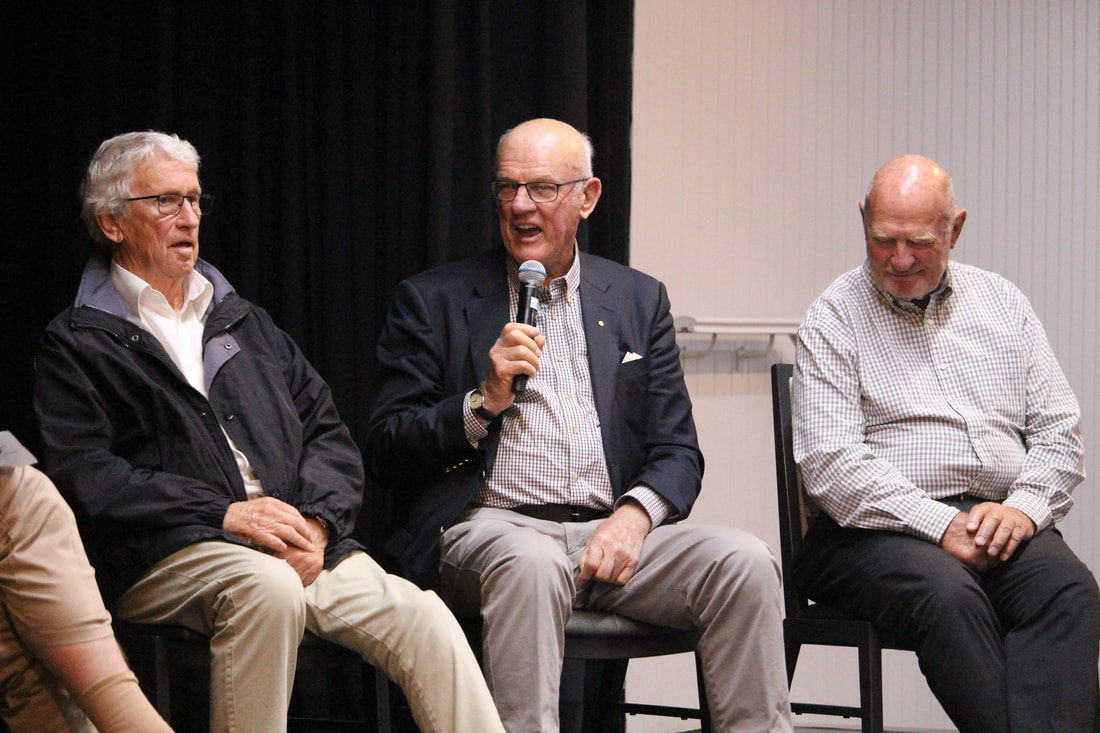
I think it was 1966/7 Wallaby tourist Russ Tulloch who recruited me to speak with Norths Rugby President Grahame O'Donnell, who was looking to commission a heritage project. The result was another documentary, Remembering Norths: The 1960s Golden Era, which previewed at their 2022 Bon Andrews Lunch, and screened at Norths Cammeray. 

Researching the film required quite some detective work to track down Norths' oldest Wallaby Jim Cross, who came alive in his nursing home at the memory of rugby touring. It was an education to learn that all those who saw Norths Wallaby Rod Phelps play in the 50s and 60s still consider him the greatest utility back they've seen. 1961 Wallaby Sparrow Dowse explained the role of John Thornett in leading the Wallabies and Norths through their 1960s golden eras, while 1963 Wallaby Les Austin provided an enthralling account of the 1963 Wallaby tour of Southern Africa, that recalled scintillating rugby, a terrifying Apartheid riot, jungle safari tours, and culinary experiences that would put anyone off sampling monkey meat.

The first of all these Wallaby interviews was with Lane Cove's Wallabies Ken Yanz and Saxon White, who had toured together with the 1957/8 Wallabies. Yanz was a "take no prisoners" forward and a truckie, while White was a gazelle-like back, and a professor of medicine. Their friendship symbolised much that's great about the game, and why it makes for great story telling. Yanz was also able to settle the decades old mystery as to how the talented 1957 Wallabies managed to lose all their tour Tests: "They didn't pass me the ball," he said.

More recently, I sat down to record Neil Harvey for Northern District Cricket Club. Harvey was one of Australia’s finest batsmen and is today the last of Don Bradman’s 1948 “Invincibles”, who famously completed an undefeated tour of England. Harvey recounted for us what Bradman later judged to be Australia’s greatest ever test victory, the Fourth Test at Leeds. 

Harvey had kept Australia in the race with a superb century in the first innings, but “England on the last day left us 404 to win,” he recalled. In a record run chase, “Bradman and Morris played  magic cricket… one of the greatest partnerships I’ve ever seen”. With the sun descending in the west and just 15 minutes to play, Australia needed four runs for victory, as Harvey arrived at the pitch. With Bradman at the non-striking end, and the team's undefeated status on the line, the 19-year-old Harvey smacked a Keith Cranston delivery for four off his first ball, and the match was won.

​Though it became his prized possession, the bat he used at Leeds never saw action again. Years later however, it was snuck from his grasp just long enough to be taken to Adelaide to be signed by Bradman himself. “This bat is a symbol of a great innings by my friend Neil Harvey in Australia’s finest test victory, Leeds 1948”, Bradman wrote.

“And that to me is just as clear today as it was then,” Harvey told me, still modest enough, after his own illustrious career, to be in awe of The Don. 

​I should thank some more regular clients like the Old Ignatians Union and St Johns College, at Sydney University, who introduced me to some very interesting stories. In fact my first ever documentary was on the life of Riverview's "Mr Chips" - Charles Fraser SJ - and I worked on a few subsequent documentaries at the college, with many fascinating moments, like this section on migrant experiences at boarding school in Australia in the 1960s. 

In recent years, St John's invited me to record some fascinating functions, including the dedication of their Kevin Fagan Memorial, honouring Australia's undeclared "saint" of the Burma Railway, and a thought provoking address to students by the last Governor of Hong Kong, Chris Patten. I was also commissioned to record something of the story of the Sisters of Charity who, in the 19th and 20th centuries, carved out a space for female governance in a “man’s world”, and, before the welfare state, built hospital and school networks that continue to underpin the wellbeing of Australia to this day, including Sydney's St Vincent's Hospital, where they pioneered Australia's first AIDS clinic in the 1980s.

My part of the story was to capture how they then handed over to lay people to run their facilities in the 21st century. In this instance, the familiar story of women moving into traditionally "male" leadership roles in society was turned on its head, as those visionary women had to mentor a new breed - often men - to take up their old leadership roles. 

In fact, you never know where screening a project will lead. I recall one reunion film, led to a commission to record a performance by Pacific Opera, while another led to businessman Charles Cuschieri inviting me to record the migrant story of his mother, Elvira Cuschieri, with her home movie footage of  leaving Egypt for Sydney on the SS Himalaya, in the 1950s. “The country was very primitive we thought because… the cheeses - there was only Coon Cheese - nothing else,” was one of Elvira's many witty remembrances.

After he watched the Lane Cove Rugby doco, Lane Cove local Ken Gilkes approached me one night at the Diddy over a midi to ask if I’d record his story. Ken had been shot down over England in 1943 - the worst burned Australian pilot to survive the war. After a screening of Sydney Uni rugby club history, I met Gary Flowers, who asked if I’d interview his 90 year old mum Betty Flowers, to tell the story of his father, who’d been “the youngest guerrilla in Malaya” before being captured in the Fall of Singapore and working on the Burma Death Railway. ​

I’d first recorded remembrances of the Burma Railway when interviewing my grandmother and great aunts about their brother Bob, who’d died on the Railway. But they too had their stories. “A gentleman from Mi5 told us that we were never to explain our work to a living soul, or we'd be shot,” was how great aunt Judith Follett commenced reminiscences of her intelligence work with the Women’s Royal Australian Naval Service. “And as far as I know, that work has never been described to this day.”

As for my grandmother, she was Dr Gwen Fleming, and among the first women majors in the Australian Army (outside the nursing corps). As a doctor in the AAMC, she commanded the medical division at Concord Hospital in Sydney, where the POWs were returning from the war - “Of course, when a ship came in, I would be looking for my brother Bob amongst the prisoners,” she told me. “But he never came."

One of the most remarkable stories shared with me was by Sergeant Fred Westphal, who had served in the Middle East and Kokoda with 6th Division. “We had to bloody win,” he said, of the bitter jungle warfare along the Kokoda Track, and this became the title of a clip I shared on YouTube, which has now been viewed 60,000 times and is used in some schools for children to understand the campaign on a human level. 

"People forget this happens," said Fred. “I don’t talk about the war. You’re the first person I’m aware of that I’ve spoken to like this, but it’s important that you know,” he concluded.

And something of that moment sums up the last 20 years for me. These things must be recorded because it’s important that we know. 

After all, only those with no future can afford to have no knowledge of the past.
2 Comments
<<Previous

    Author

    Theo Clark.

    Archives

    February 2026
    January 2026
    August 2025
    February 2025
    September 2024
    August 2024
    July 2024
    June 2024
    September 2022
    August 2022
    July 2022
    June 2022
    May 2022
    April 2022
    February 2022
    December 2021
    November 2021
    June 2021
    August 2020
    June 2019
    January 2019
    December 2017
    November 2017
    September 2016
    September 2015
    August 2015
    July 2014
    July 2012

    Categories

    All

    RSS Feed

  • Home Page
  • Blog & Gallery
  • Testimonials
  • Buy DVDs
  • Sports Clubs
  • Life Stories
  • War Memoirs
  • Film Library
  • In the News
  • Contact Us